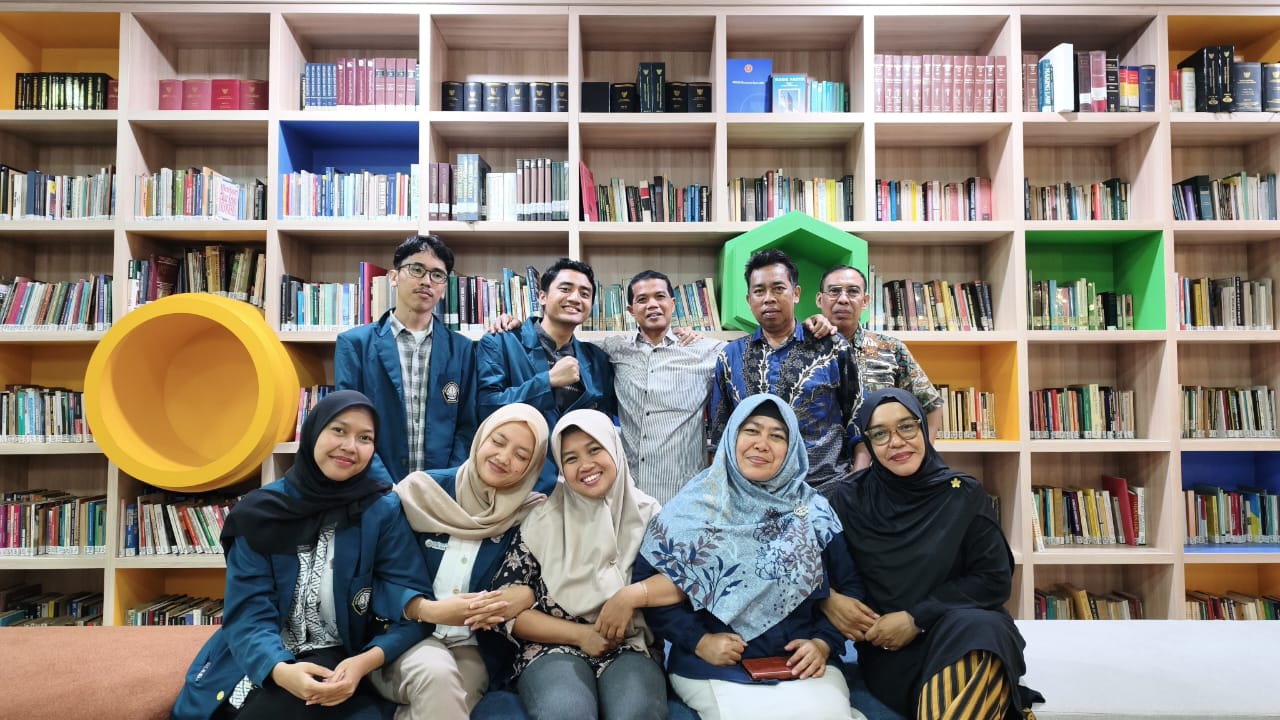

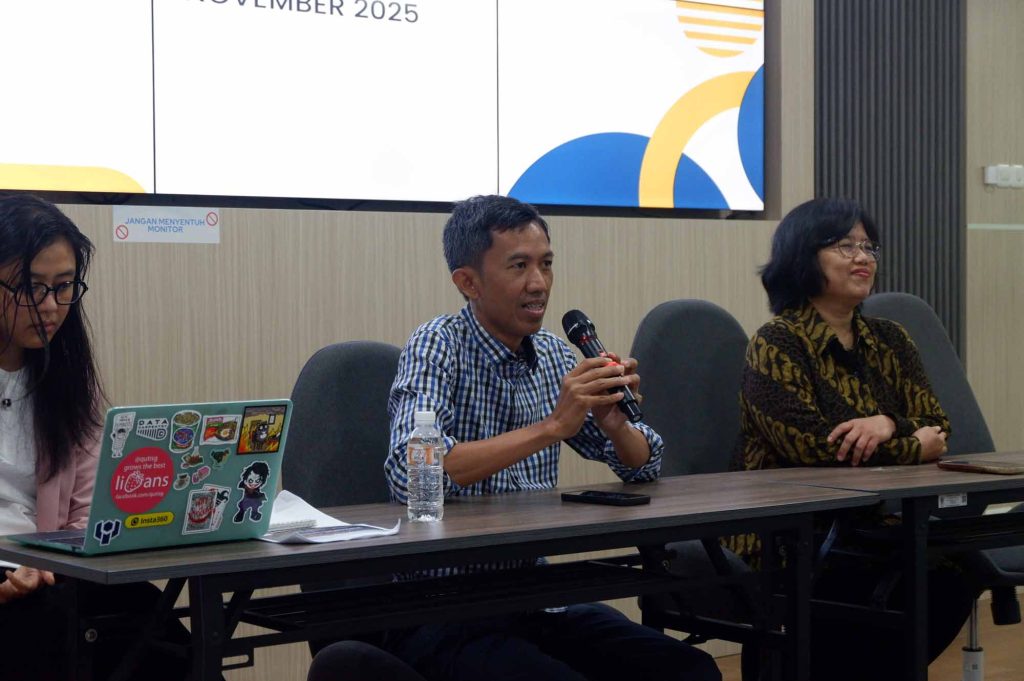
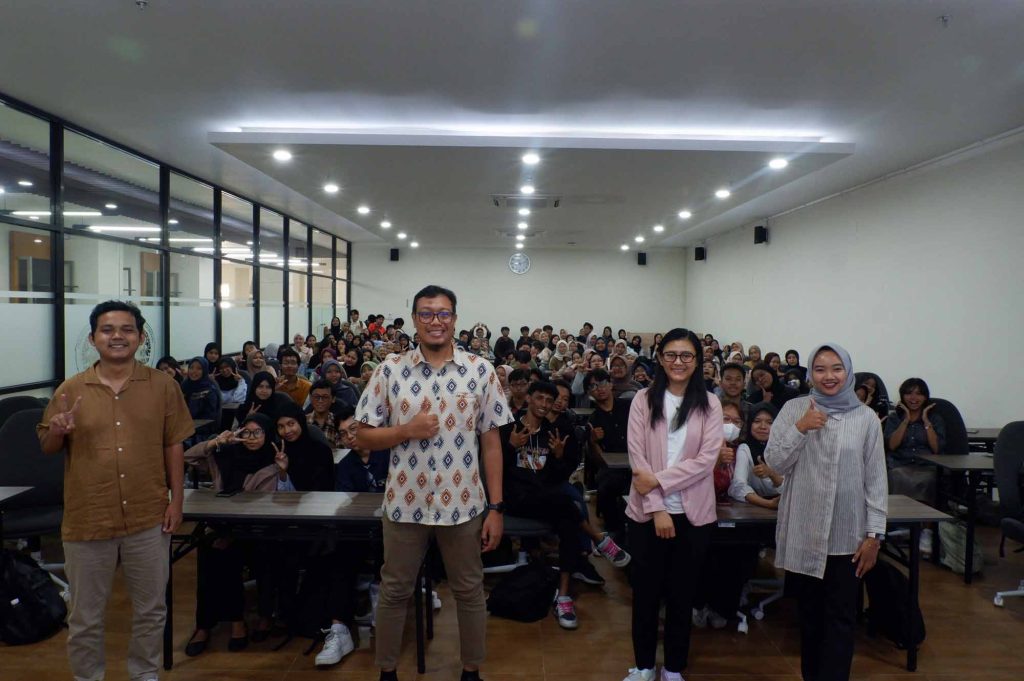
Semarang, November 4, 2025 – Library and Information Science Study Program, Faculty of Humanities, Universitas Diponegoro held a visiting practitioner with Dr. Bekti Mulatiningsih, Ph.D., a Specialist Librarian at the University of Queensland, Australia, with the theme “From Collection to Collaboration: Becoming a Specialist Librarian in the Modern Research Era”. This event provides an opportunity for Library and Information Science students from the 2024 cohort to meet Dr. Bekti Mulatiningsih, Ph.D., in person at the 4th floor of the Undip Library, Semarang.
Dr. Bekti shared his professional experience during his career in Library and Information Science as a Medical Librarian and Medical Research Librarian at an NGO-based library in Indonesia until he became a Specialist Librarian in Research Outputs and Impacts at the University of Queensland, Australia. In this role, he is involved in the Scholarly Communications and Repository Services (SCARS) team, which is responsible for providing services to stakeholders and leadership and training to librarians, as well as managing UQ eSpace, the University of Queensland’s institutional repository.
In addition, Dr. Bekti also shared insights related to the work of Research Data and Open Services, which is tasked with managing open publications and research, including providing strategic guidance in selecting publication venues and promoting research results. Furthermore, he also discussed services related to research outputs and impacts, which are responsible for managing and reporting institutional research outputs and impacts through metrics and training support for researchers to increase research visibility through collaboration and research system management.
Dr. Bekti also shared information about hard skills, soft skills, and other skills that must be possessed to become a Specialist Librarian, motivating participants to develop relevant skills so that they can become competent and adaptive Specialist Librarians.

 Furthermore, he also introduced the concept of an evidence-based approach that prioritizes accurate evidence as the basis for decision making. This concept then became a basic principle used by the Matrix Team to measure the impact of research, support strategic decisions, find opportunities for collaboration, strengthen researcher profiles, evaluate research performance, and provide evidence reports. Matrix measurements are carried out using various tools and vendors, each of which has its own advantages and disadvantages in terms of usage. He also explained the various metric indicators commonly used to measure research output and impact.
Working as a Specialist Librarian, Dr. Bekti also highlighted the challenges in the dynamics of his profession, including changes in government research policies, the need for literacy metrics, exploration of new tools and features, digital skills, and increasing reporting demands from both the rectorate and external parties. This provides an overview of the challenges that a Specialist Librarian must face in order to survive amid the massive changes and developments in the modern era.
Towards the end of the session, Dr. Bekti also opened the floor for questions and answers, which were enthusiastically welcomed by participants who asked about the scope of work, library management, competencies as specialist librarians, and collaboration on research services between libraries. He emphasized that libraries should shift their focus toward enhancing collaboration rather than competition, so that all libraries can work together to meet their research service needs. At the end of the session, he also conducted a quiz on the material presented earlier through the Mentimeter platform, which was enthusiastically received by all participants of the public lecture.
Through the presentation of material combined with the distinctive photography style of the University of Queensland, Dr. Bekti created a more lively and professional atmosphere for the public lecture, capturing the attention and enthusiasm of the participants. The quiz conducted at the end of the session also served as a reflection for the participants on the material that had been presented earlier and demonstrated the active involvement of all participants in the public lecture.

Author: Najwa Nafilah Anggraini